

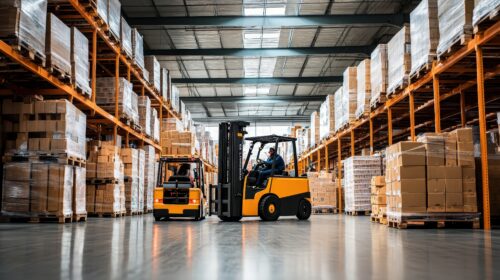
Every time materials are received, moved, staged, assembled, or shipped, material handling systems are at work. These systems often determine whether an operation runs smoothly or struggles with bottlenecks, labor strain, and rising costs.
As we move into 2026, the material handling industry continues to evolve in response to labor shortages, higher throughput demands, tighter safety standards, and increased pressure to design systems that are both efficient and flexible.
This overview outlines what material handling includes, how workflows typically function, the KPIs that matter most, and the trends shaping the industry today.
Material Handling Is a System, Not a Product
Material handling refers to the movement, protection, storage, and control of materials and products throughout manufacturing and distribution processes. It spans everything from manual handling to and from a workstation to fully automated systems moving pallets across a facility.
Material handling is often treated as a collection of components: carts, racks, conveyors, forklifts. In reality, it is a system that connects every operational function inside a facility.
At its core, material handling answers four questions:
- Where do materials and parts live?
- How do they move?
- When are they replenished?
- How does a person interact with them?
When these questions are answered independently, inefficiencies compound. When they are designed together, material handling becomes a space for opportunity. BUILT Systems focuses on this integration at the workstation and cell level: where material handling, ergonomics, and structure meet.
How Material Actually Moves Through a Facility
Raw materials, components, or WIP are supplied to the station and presented at the correct height, reach zone, and orientation. After use, finished parts, scrap, and dunnage are cleared without disrupting the operator. Replenishment happens in parallel so work continues without waiting.
BUILT Systems workstations are designed to support this loop directly — using height-adjustable surfaces, standardized frames, and configurable accessories to ensure materials are presented consistently at the point of use.
Core Material Handling Elements
The global material handling equipment market size reached $215.97 billion in 2025 (almost $75 billion higher than predicted in 2021), with continued growth driven by manufacturing, warehousing, and e‑commerce. As investment increases, the performance gap between well-designed systems and poorly integrated ones widens.
Common material handling categories include:
- Manual handling: carts, hand trucks, lift tables, bins, and ergonomic workstations
- Storage systems: shelving, racking, flow racks, and mezzanines
- Transport systems: conveyors, AGVs/AMRs, forklifts, and towlines
- Positioning equipment: lift assists, turntables, and height‑adjustable work surfaces
- Control & software: warehouse management systems (WMS), sensors, and tracking tools
The Real Work Happens Between Processes
Across manufacturing and distribution environments, the same issues appear repeatedly. Operators travel excessive distances between tasks. Materials are handled multiple times before use. Fixed-height surfaces force bending or overreaching. Storage, replenishment, and workstations are disconnected.
The cost of these inefficiencies adds up quickly. Studies show that material handling activities can account for 20–30% of total manufacturing labor costs, and unnecessary handling is one of the largest contributors to waste in industrial environments.
Most value is created at machines, workstations, and assembly cells. Most waste, however, happens between them. Material handling fills this space. It includes:
- Transferring parts between operations
- Presenting materials at the right height and orientation
- Buffering work without creating excess inventory
- Keeping operators supplied without interrupting flow
Poor material handling forces operators to leave their stations, reach outside neutral zones, or wait on replenishment. Good material handling is barely noticed – because it simply works.
Ergonomics is an Output Strategy
Ergonomics in material handling is often framed as a safety initiative. In practice, it is a throughput strategy.
In the U.S. alone, material handling roles account for over one million workers, and musculoskeletal disorders remain one of the leading causes of lost workdays in manufacturing and warehousing. Poor material presentation increases fatigue, slows cycle times, and raises injury risk.
When materials are consistently presented at the correct working height, within optimal reach zones, and in the proper orientation, operators work faster, make fewer errors, and maintain output longer throughout a shift. Over time, this leads to higher consistency, lower turnover, and fewer disruptions.
Height-adjustable workstations, standardized layouts, and integrated carts and conveyors are no longer upgrades. They are foundational elements of modern material handling design.
Automation Should Follow Stability
Automation continues to reshape material handling, particularly in high-volume environments. Adoption of conveyors, AS/RS, AGVs, and AMRs has been shown to increase throughput by 30% or more in well-designed operations, while improving labor productivity by similar margins.
However, automation does not correct unstable processes. Facilities that succeed with automation first standardize manual workflows, reduce variation in material presentation, and establish consistent replenishment methods. In these environments, automation strengthens flow. In unstable systems, it simply accelerates inefficiencies.
This is why many organizations continue to invest heavily in flexible, human-centered material handling solutions alongside automation.
Designing for Change in 2026
Adaptability is the defining requirement for material handling today. Product mix changes. Volumes fluctuate. Labor availability shifts.
Material handling systems must evolve without requiring a full redesign. This is driving demand for modular equipment, standardized components, configurable workstation platforms, and layouts that can scale up or down.
Facilities that design for change are better positioned to absorb growth, adopt automation, and respond to workforce challenges.
Sources:
https://www.thebusinessresearchcompany.com/report/material-handling-equipment-global-market-report
https://zipdo.co/material-handling-industry-statistics/
https://www.360researchreports.com/market-reports/material-handling-equipment-market-213590